For many Utah families raising neurodivergent children, getting to a therapy session or medical appointment involves far more than putting an address into GPS and leaving the house. A routine visit can mean navigating an unfamiliar environment, disrupted routines, sensory triggers, transportation logistics, hunger, waiting rooms, and uncertainty about what will happen next.
At Bridgeway Connections, we understand that access to care is not only about whether an appointment is available. Non-clinical barriers can determine whether a family can comfortably and consistently reach that care in the first place.
While no preparation strategy works for every child, a few practical steps can make leaving home and arriving at an appointment feel more predictable.
Why Medical and Therapy Visits Can Feel So Difficult
Consider everything that can change on appointment day: the normal routine may shift, school might end early, the drive may be unfamiliar, the building may smell different, and the waiting room may have bright lights, conversations, phones, or crying children.
Research reflects these challenges. A qualitative study of autistic youth found that sensory stimuli and communication difficulties could negatively affect healthcare experiences. Participants also identified preparation, sensory items, and positive interactions with clinicians as factors that helped create better experiences.
For parents practicing Utah special needs parenting, preparation does not mean eliminating every difficult moment. It means reducing avoidable uncertainty where possible.
1. Explain the Visit in a Way Your Child Understands
Whenever possible, give your child an idea of what is coming.
Depending on their communication preferences, this might mean:
- Looking at photos of the building or provider
- Creating a simple picture sequence
- Reviewing the trip on a map
- Using a short written schedule
- Practicing part of the visit at home
- Explaining what will happen first, next, and last
Keep the information concrete. Instead of saying, “We’re going to the doctor and everything will be fine,” you might explain: “First we drive. Then we check in. We wait. Then we see the doctor. Then we go home.”
Importantly, visual schedules are tools, not guarantees. Research involving autistic children and difficult transitions found that visual schedules alone did not eliminate transition-related challenging behavior. Preparation should therefore be individualized and combined with the supports your child already finds helpful.
2. Pack for Regulation, Not Just the Appointment
Think about what helps your child feel comfortable when the environment becomes overwhelming.
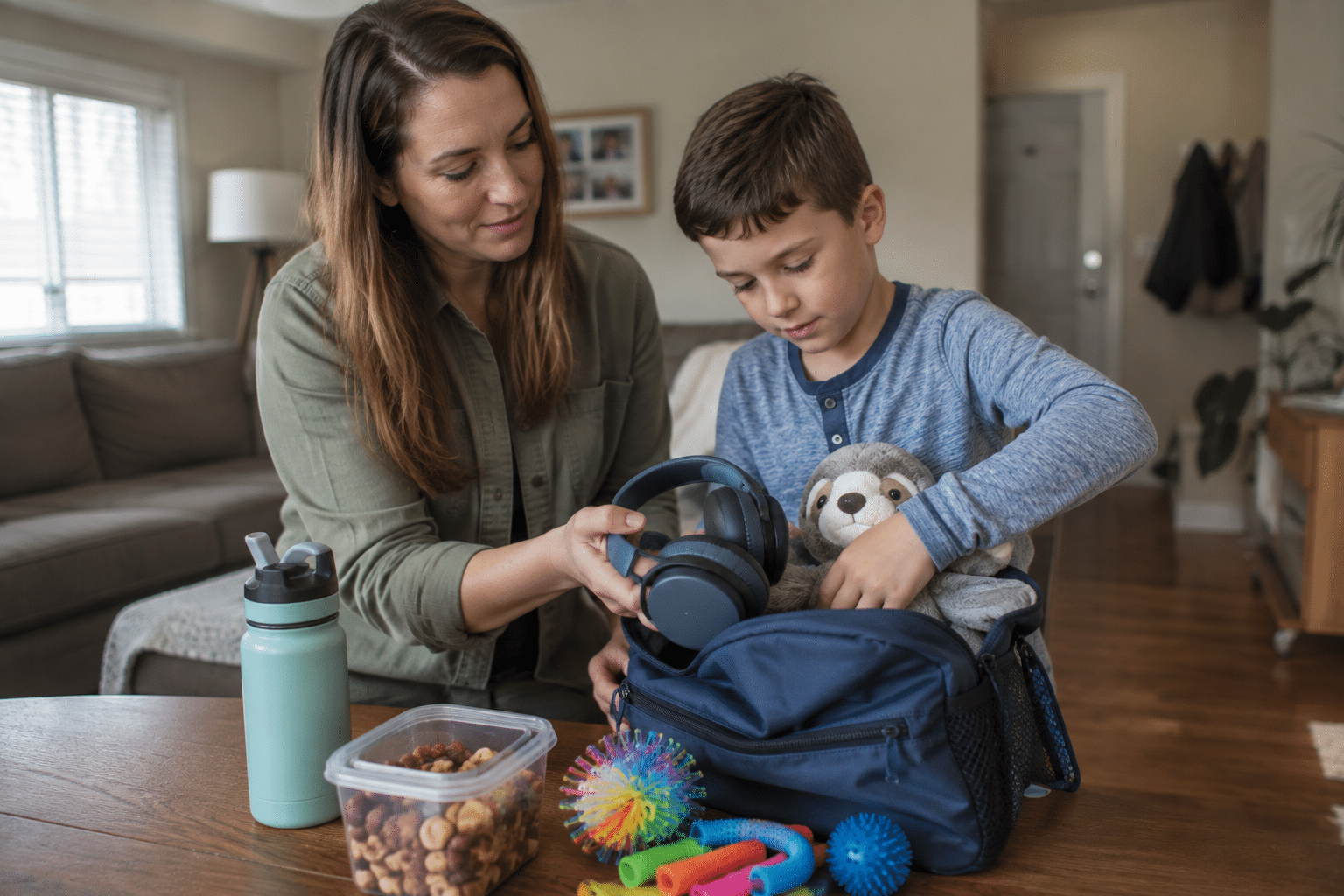
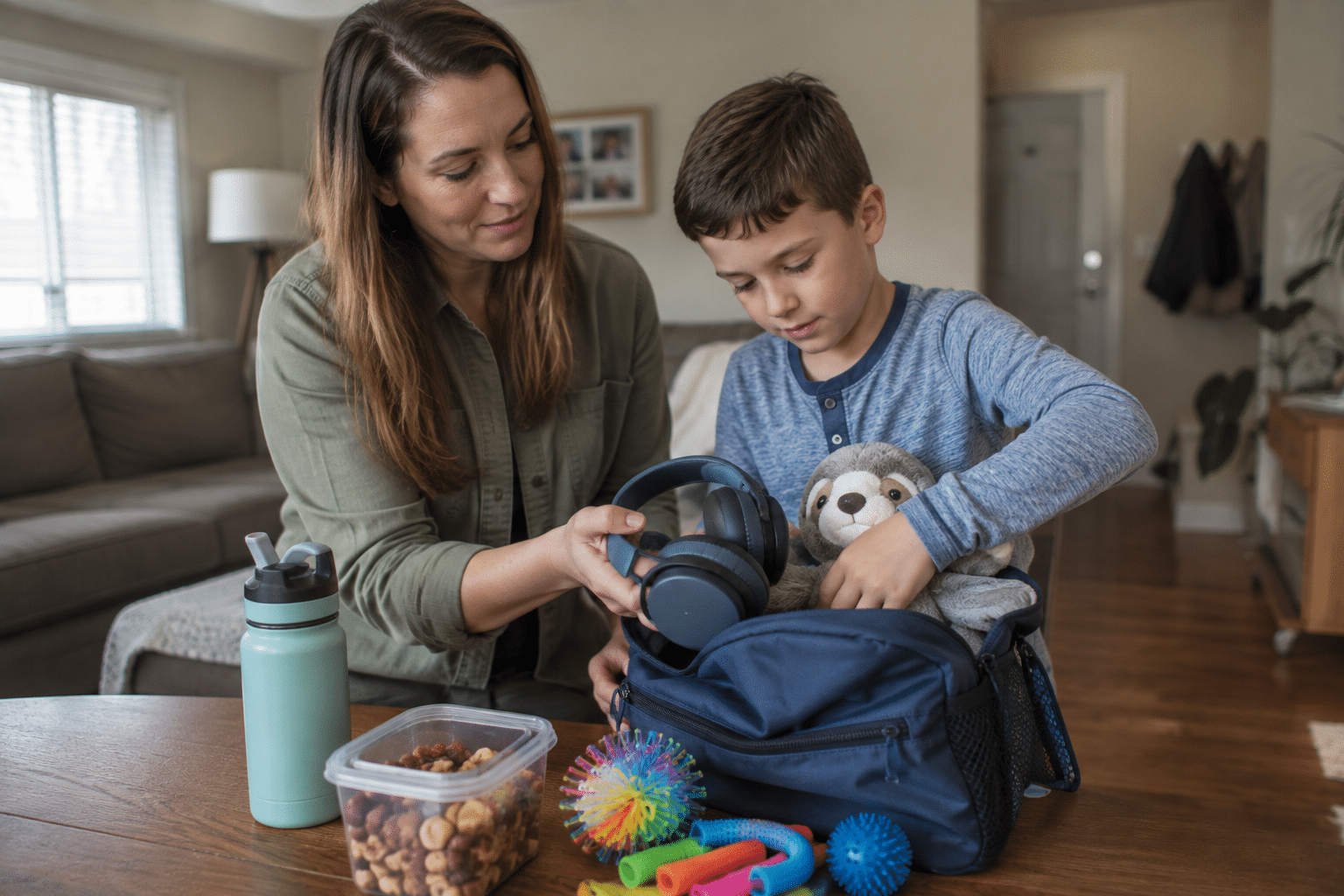
Your appointment bag might include familiar headphones, a favorite small toy, sunglasses, a tablet, a comfort object, a fidget, preferred snacks when medically appropriate, water, or another familiar sensory item.
Meaningful evidence supports adapting environments to sensory needs. In a randomized crossover trial involving 162 autistic children, researchers found significantly lower physiological stress during dental care in a sensory-adapted environment compared with a regular dental environment.
You do not need to recreate a sensory-friendly clinic in your backpack. Bringing a few familiar supports can simply give your child something predictable in an unpredictable environment.
3. Reduce the Rush Before Leaving Home
Appointment stress can begin long before you reach the clinic.
If possible, build additional time into your departure routine. Lay out clothes ahead of time. Pack the appointment bag earlier in the day or the night before. Keep important documents together. Confirm the address, parking instructions, and transportation plan.
For families juggling several children, jobs, therapy schedules, and other responsibilities, these details can carry a significant mental load.
A simple pre-visit checklist can include:
- Appointment time and location
- Transportation arrangements
- Insurance or required documents
- Medications or medical information
- Communication or sensory supports
- Snacks and water, when appropriate
- Comfort items
- Phone charger
- Extra clothes if needed
The goal is not a perfectly organized morning. It is fewer last-minute problems competing for everyone’s attention.
4. Contact the Provider Before You Arrive
You know your child better than a waiting room does.
If your child has specific sensory, communication, mobility, or waiting needs, consider contacting the office before the appointment. Ask what accommodations may be available.
For example, you might ask whether you can wait in the car until a room is ready, schedule during a quieter period, reduce unnecessary waiting, dim lights in the exam room, or bring preferred sensory equipment.
These requests can matter. In one healthcare study involving guardians of autistic children, long waits, increased sensory stimulation, and crowded environments were among the reported sources of stress during visits.
Giving staff information ahead of time can also help everyone approach the appointment with clearer expectations.

5. Plan Transportation as Part of Care
Transportation is easy to treat as a separate issue from healthcare, but families cannot benefit from services they cannot reliably reach.
Before appointment day, consider the entire trip: How long will it take? Where will you park? Does your child tolerate that amount of time in the vehicle? Is another caregiver needed? What happens if the appointment runs late?
For some Utah families, access to specialized medical transit can be an important part of reducing this logistical burden.
This is part of why non-clinical autism support matters. Removing practical barriers around care can give families more capacity to focus on the appointment itself.
6. Leave Room for Recovery Afterward
An appointment ending does not necessarily mean the difficult part is over.
Some children may need quiet time, movement, a familiar activity, food, outdoor play, or fewer demands after navigating a challenging environment.
Try to avoid automatically filling the next hour with errands simply because you are already out of the house. When possible, consider what your child typically needs after high-demand or sensory-heavy situations.
The same applies to caregivers. Managing schedules, transportation, communication, siblings, paperwork, and regulation can be exhausting. Making the day easier is not about lowering expectations. It is about designing routines around the family’s needs and actually living them.
Preparation Should Support Your Family, Not Add Another Burden
There is no perfect appointment routine.
One child may benefit from knowing every step in advance. Another may become more anxious with too much information. One may need headphones in the waiting room, while another needs movement. Strategies can also change as children grow.
Successful preparation starts with observing your own child and keeping what genuinely helps.
For families searching for autism support resources in Utah, that individualized approach matters. Support should create more options, not another set of rules families are expected to follow.

Bridgeway Connections: Removing the Barriers Around Essential Care
Families should not have to overcome transportation difficulties, food insecurity, inaccessible environments, and other everyday barriers alone just to reach essential services.
Bridgeway Connections is a Utah-based nonprofit focused on removing the non-clinical roadblocks that can prevent youth with autism and neurodivergent needs from accessing care and participating in their communities.
From specialized transportation needs to sensory-friendly spaces and practical family resources, we aim to strengthen access while respecting the independence, knowledge, and resilience families already bring.
If you are a parent, caregiver, community partner, or Utah business leader looking for ways to support neurodivergent families, visit Bridgeway Connections to learn more about our work and available resources.