


Primary Keywords: non-clinical support
Why Non-Clinical Support Is Essential for Neurodivergent Children and Their Families

For many families raising a neurodivergent child, getting the right therapy or care is only part of the challenge. The harder question is often much more practical: Can we actually get there?
A parent may find an excellent provider, only to struggle with reliable transportation. A child may benefit from community activities but have nowhere nearby that feels manageable from a sensory standpoint. A family may be balancing therapy appointments with rising grocery costs and a child who eats a very limited range of foods.
These challenges are not clinical, but they can directly affect whether clinical care is accessible and sustainable.
That is why Bridgeway Connections focuses on removing the everyday barriers that can stand between Utah families and the support their children need. For families looking for non-clinical autism support, addressing transportation, food access, sensory-friendly environments, and caregiver strain can be an essential part of building a workable support system.
What Is Non-Clinical Support?
Non-clinical support addresses the circumstances surrounding a child’s care rather than providing the care itself.
A therapist, physician, or behavioral specialist may provide clinical services. Non-clinical support asks what needs to happen outside the treatment room for a family to consistently access those services and maintain everyday stability.
That can include:
- Reliable or specialized transportation to appointments
- Access to appropriate and dependable food
- Sensory-friendly community spaces
- Inclusive recreation and opportunities for outdoor play
- Practical resources for parents and caregivers
- Connections to community organizations and other families
These needs can easily be treated as secondary. For a family experiencing them, however, they can determine whether a carefully designed care plan works in real life.
Transportation Can Determine Access to Care
Consider a child who has multiple appointments each week. On paper, everything is arranged. In practice, a parent still has to coordinate work, school, siblings, travel time, and transportation that meets their child’s individual needs.
One transportation problem can mean a missed appointment. Repeated problems can disrupt continuity of care altogether.
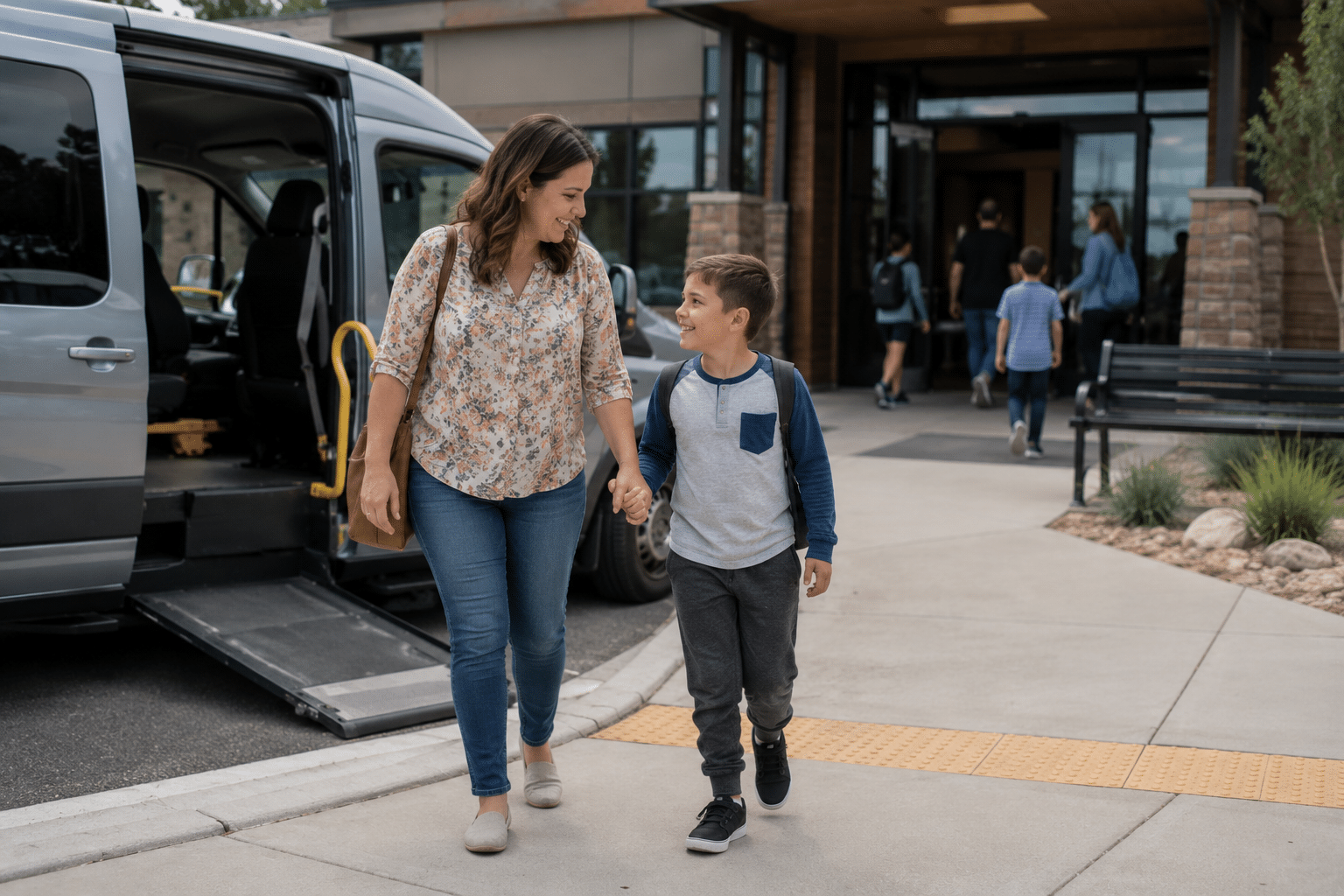
This is why specialized medical transit in Utah can be more than a convenience. Reliable transportation helps turn access to a provider into actual access to care.
For families in Salt Lake City, St. George, and communities across Utah, removing transportation barriers can also reduce the daily logistical pressure on caregivers.
Food Security Is More Complex Than Having Enough Food
Food insecurity can become particularly complicated when a neurodivergent child has strong sensory preferences, food selectivity, or a limited range of accepted foods.
A 2026 systematic review and meta-analysis estimated food insecurity prevalence among families of autistic children and young people at approximately 29%, rising to 31% after adjustment. Researchers emphasized that effective food support should consider sensory, behavioral, and nutritional needs rather than focusing solely on financial assistance.
For a parent, that distinction matters. A pantry full of food does not necessarily solve the problem if a child cannot tolerate its textures, smells, or flavors.
Effective child food insecurity resources should therefore recognize that food accessibility includes whether available foods are realistically usable by the family.
Sensory-Friendly Spaces Create Opportunities to Participate
Many everyday environments are designed around assumptions about noise, crowds, lighting, movement, and personal space.
For some neurodivergent children, those environments can quickly become overwhelming.
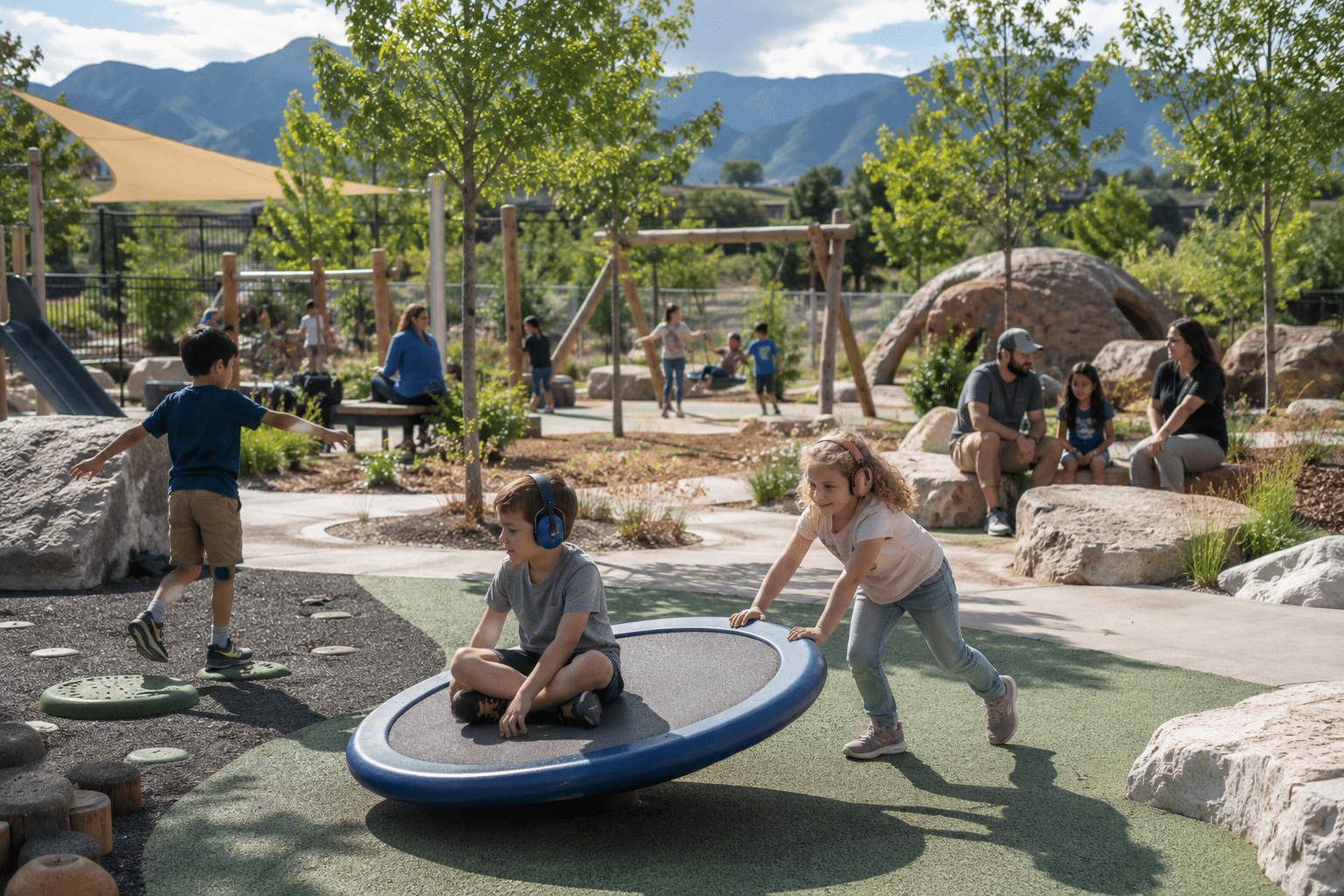
Providing sensory-friendly activities for kids, inclusive outdoor spaces, or thoughtfully designed sensory-integrated playground equipment can give children more opportunities to explore, move, socialize, and participate at their own pace.
The goal is not to make every child interact in the same way. It is to create environments with enough flexibility for more children to take part comfortably.
For Utah communities, that means inclusion can extend beyond schools and therapy centers into parks, events, playgrounds, and everyday community life.
Supporting the Child Also Means Supporting the Caregiver
Parents and caregivers frequently become the coordinators holding an entire support system together.
They manage appointments. They communicate with schools. They research resources. They plan meals. They anticipate sensory challenges. They adjust work schedules. They advocate when systems do not fit their child’s needs.
That workload matters.
A systematic review of parent caregivers of autistic children found increased levels of stress, anxiety, and depression and emphasized that unmet caregiver needs can affect the well-being and functioning of the entire family.
Another meta-analysis involving 37 studies found that parent-focused interventions produced improvements in areas such as parenting confidence and mental health, although they did not consistently reduce overall caregiving burden or stress.
That finding highlights an important point: families cannot always self-care their way out of structural problems. Sometimes the appointment is still 40 miles away. The transportation still needs to be arranged. The grocery budget is still stretched. The community event is still too overwhelming for the child.
Reducing autism caregiver burnout also requires addressing those practical pressures.
A Stronger Support System Connects the Pieces
Clinical services remain important for many neurodivergent children. Non-clinical support does not replace therapy, medical care, or other professional services.
It helps make those services more reachable.
Imagine the difference between these two situations.
In the first, a parent receives a referral and then has to independently solve transportation, childcare, food costs, scheduling, and sensory concerns.
In the second, the family has connections to practical resources that help address some of those barriers.
The child receives the same referral, but the family’s ability to follow through can look very different.
This is where community organizations, local businesses, donors, healthcare providers, and families can work together. Building stronger autism support resources in Utah is not simply about adding more services. It is also about building bridges between families and the services that already exist.
What Utah Communities Can Do
Meaningful inclusion can start with practical changes. Businesses can support accessible transportation or community programs. Local organizations can consider sensory needs when designing family events. Food assistance programs can provide greater flexibility for families managing restricted diets. Recreation spaces can incorporate quieter areas and inclusive equipment.
Most importantly, communities can listen to neurodivergent children and their caregivers before deciding what support should look like.
Families are already doing substantial work every day. Effective community support should remove unnecessary obstacles rather than add another system for parents to navigate.
Building a Bridge Between Care and Everyday Life
A child can have an excellent care team and still face barriers outside the treatment room.
Bridgeway Connections addresses those gaps by helping remove non-clinical roadblocks affecting neurodivergent youth and their families across Utah. By focusing on challenges such as food insecurity, specialized transportation, and access to sensory-friendly spaces, the goal is to make existing care and community participation more accessible.
Whether you are a parent searching for practical support or a Utah business leader looking to create meaningful local impact, visit Bridgeway Connections to learn more about its work and opportunities to get involved.
